
Ever feel like your job is slowly draining your energy? I did. For years, I showed up to work feeling like a cog in a machine—until I discovered how psychological principles could transform my experience. The truth is, we spend nearly a third of our lives earning a paycheck. That’s over 90,000 hours of interactions, deadlines, and coffee breaks that shape who we become.
What changed everything for me was realizing our professional environments aren’t just physical spaces. They’re living ecosystems where every conversation, policy, and team dynamic affects our mental bandwidth. When we understand the hidden forces at play, we stop reacting to workplace challenges and start navigating them intentionally.
This isn’t about becoming an office therapist. It’s about practical strategies that help you:
- Decode why certain colleagues trigger frustration
- Recognize when workload demands cross healthy boundaries
- Transform stressful situations into growth opportunities
Key Takeaways
- American workers typically spend 90,000+ hours at their jobs during their careers
- Daily interactions with coworkers significantly influence stress levels and job satisfaction
- Psychological awareness helps prevent burnout and improves decision-making
- Simple mindset shifts can turn toxic patterns into productive outcomes
- Every employee has the power to shape their work experience positively
Let’s explore how seeing your job through a psychological lens can create lasting change—not just in your career, but in your overall quality of life.
Introduction to Workplace Psychology
Imagine understanding the hidden patterns in your office interactions. That’s what this field reveals—it’s about decoding why we act the way we do during meetings, deadlines, and even coffee breaks. At its core, it’s the science of optimizing how teams function and grow.

This discipline studies everyday behavior in companies, from how individuals make decisions to why group dynamics shift. It’s not just theory—researchers found organizations using these principles see 23% higher retention rates. Why? Because they address what truly drives people.
Here’s how traditional methods stack up against psychology-based approaches:
| Aspect | Traditional Approach | Psychology-Based Approach |
|---|---|---|
| Conflict Resolution | Enforce top-down rules | Identify emotional triggers first |
| Motivation | Rely on bonuses | Align tasks with personal values |
| Stress Management | Offer generic wellness programs | Tailor solutions to team needs |
By focusing on human needs rather than just productivity metrics, companies create environments where people thrive. You’ll notice shifts—like fewer misunderstandings and more collaborative problem-solving. These tools help turn daily friction into momentum.
What makes this approach unique? It bridges lab research with your actual desk. Whether you’re navigating a tough conversation or redesigning workflows, these insights offer actionable steps. The result? Better work experiences for everyone involved.
Defining Organizational and Workplace Psychology
Many think organizational success hinges on spreadsheets and strategy decks. The real magic happens between people. This specialized field studies why teams click or clash—and how to turn insights into action.
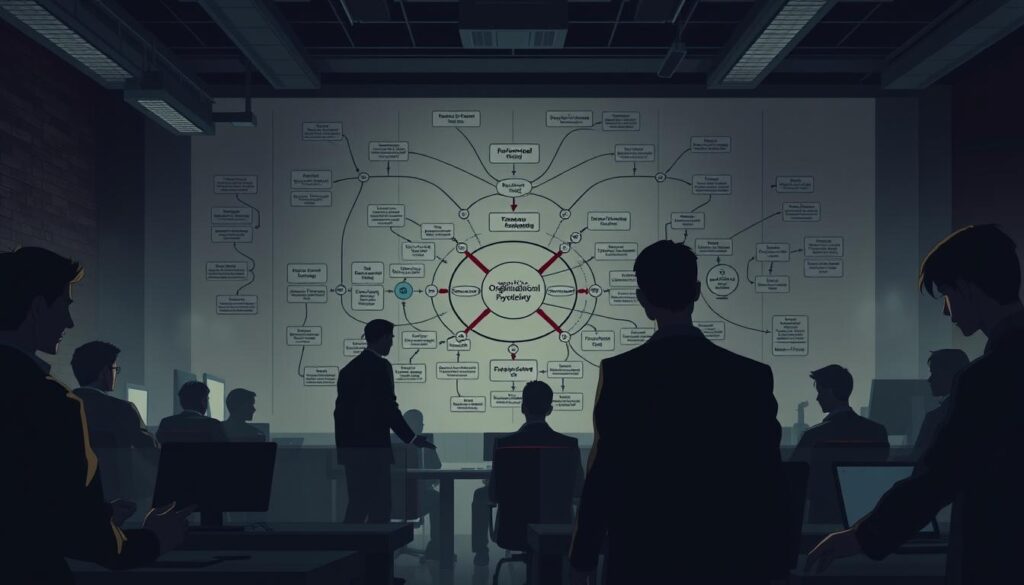
At its core, organizational psychology examines how individuals and groups behave in professional settings. Unlike general psychology, it focuses specifically on:
- Aligning tasks with personal motivators
- Designing roles that reduce burnout
- Creating feedback systems people actually use
Research shows companies using these principles see 31% faster conflict resolution. Why? Because they address root causes, not just symptoms. Consider how two colleagues might interpret the same deadline differently—one sees pressure, another sees purpose.
“The best workplaces don’t happen by accident—they’re built using evidence-based design.”
This discipline bridges academic research with daily realities. It helps leaders spot patterns in employee behavior and craft solutions that stick. Whether improving collaboration or refining hiring processes, every strategy starts with understanding human needs.
While related to social psychology, organizational approaches zero in on shared goals. Teams become more than co-workers—they become partners in problem-solving. That’s how ordinary groups achieve extraordinary results.
Fundamentals of Workplace Psychology
What if your daily tasks could fuel your energy instead of draining it? That’s the power of understanding human behavior in professional settings. At its core, this field reveals how our natural drives shape team success and personal fulfillment.
Let’s break down two game-changers: motivation and job satisfaction. Studies show teams with aligned personal values outperform others by 17% in productivity metrics. Why? Because meaningful work sparks intrinsic drive—the kind that survives tight deadlines and Zoom fatigue.
| Focus Area | Traditional Approach | Modern Psychology Approach |
|---|---|---|
| Motivation | Yearly bonuses | Skill-development opportunities |
| Feedback | Annual reviews | Weekly growth conversations |
| Task Design | Rigid job descriptions | Flexible role customization |
Researchers gather insights through anonymous surveys and real-time behavior tracking. One tech company reduced burnout by 43% simply by analyzing how teams collaborated during crunch periods. These methods uncover hidden patterns—like why certain departments thrive under pressure while others crumble.
When individual well-being aligns with company goals, magic happens. Employees become problem-solvers, not just task-completers. This synergy transforms ordinary groups into high-performing units where everyone’s strengths get spotlighted.
The Evolution of Organizational Psychology
Our journey through organizational psychology starts in smoky factories of the early 1900s. Frederick Taylor’s stopwatch studies aimed to boost efficiency through scientific management, treating workers like precision instruments. But this mechanical view soon faced challenges.
World War I shifted the game. Psychologists developed Army Alpha/Beta tests—the first standardized assessments for matching skills to military roles. This wartime innovation became peacetime practice, shaping modern hiring processes.
The 1920s brought a revelation: productivity isn’t just about lighting or breaks. The Hawthorne Studies showed how social connections drive performance. As one researcher noted:
“Workers aren’t cogs—they’re human systems responding to attention.”
World War II expanded the field further. Military needs birthed advanced training programs and team dynamics research. Post-war companies adopted these methods, leading to formal academic programs and groups like SIOP.
By the 1970s, the focus widened beyond factories. Modern organizational psychology now tackles remote collaboration, cultural diversity, and mental health. What began as time-motion studies now helps companies balance profit with human well-being—proving growth and care can coexist.
Core Theories Shaping Our Work Environment
Why do some teams click while others clash? The answer lies in foundational models that predict group success. Let’s unpack the frameworks explaining why we work the way we do.
Frederick Taylor’s Scientific Management revolutionized factories through time studies and task specialization. While effective for assembly lines, modern organizational psychology reveals its limitations in creative fields. Contrast this with Elton Mayo’s Human Relations approach—his Hawthorne Studies proved social bonds boost performance more than lighting or breaks.
Bruce Tuckman’s group development model explains why new teams often stumble before excelling. The five phases—Forming to Adjourning—help leaders anticipate conflicts and nurture collaboration. Meanwhile, McGregor’s Theory X/Y reshaped management styles by challenging assumptions about worker motivation:
“Employees aren’t inherently lazy—they thrive when trusted with autonomy.”
Maslow and Herzberg taught us that meeting basic needs prevents dissatisfaction, but meaningful tasks drive excellence. Their insights explain why ping-pong tables rarely boost morale as effectively as growth opportunities.
| Theory | Focus | Modern Application |
|---|---|---|
| Taylorism | Efficiency metrics | Manufacturing workflows |
| Contingency Theory | Situational flexibility | Remote team management |
These frameworks form a toolkit for decoding behavior patterns. By blending time-tested models with current research, we create environments where both individuals and organizations flourish.
Examining Workplace Dynamics and Employee Behavior
Ever notice how some groups click effortlessly while others constantly stumble? The secret lies in prioritizing human connections over spreadsheets. Teams thrive when managers focus on shared experiences rather than just quarterly targets.
Research reveals groups with strong emotional bonds outperform others by 29% in problem-solving tasks. Why? Because trust fuels collaboration. Instead of fixating on economic incentives, successful leaders nurture environments where authentic relationships flourish.
Consider these contrasting approaches:
| Focus Area | Materialism-Driven | Relationship-Driven |
|---|---|---|
| Conflict Resolution | Policy enforcement | Active listening sessions |
| Team Building | Budget allocations | Shared goal workshops |
Culture acts as invisible glue. When values like transparency and mutual respect permeate daily interactions, employees naturally align their behavior with organizational goals. One study found companies assessing culture quarterly reduced turnover by 37%.
Emotional intelligence transforms dynamics. Leaders who recognize frustration cues can defuse tensions before they escalate. This awareness creates ripple effects—teams communicate clearer, innovate faster, and sustain momentum through challenges.
Enhancing Employee Well-being and Mental Health
Healthy teams don’t just happen—they’re cultivated through intentional support systems. Modern organizations now prioritize employee well-being as a strategic advantage, moving beyond ping-pong tables to address root causes of stress. Chronic pressure at work doesn’t just affect productivity—it rewires our nervous systems over time.
- Mandatory mental health days preventing burnout cycles
- Real-time stress tracking through anonymous pulse surveys
- On-site counselors available during high-pressure periods
Harvard researcher Amy Edmondson’s work proves why psychological safety matters:
“Teams that admit mistakes early solve problems 40% faster.”
This safety net transforms how employees handle challenges—from speaking up in meetings to asking for help.
| Traditional Approach | Modern Solution |
|---|---|
| Yearly stress workshops | Embedded mindfulness apps |
| Generic EAP referrals | Customized care pathways |
The ripple effects are measurable. Companies investing in well-being programs report 31% lower turnover and 19% higher innovation rates. When people feel heard and supported, they bring their best selves to work—creating environments where both individuals and organizations thrive.
Strategies for Building a Positive Work Environment
What separates thriving teams from struggling ones? Often, it’s the intentional choices we make daily. Cultivating a supportive culture starts with valuing how employees feel about their contributions. Simple actions like weekly check-ins boost morale more than annual reviews ever could.
Open communication channels transform dynamics. Teams using real-time feedback tools report 28% fewer misunderstandings. Leaders who prioritize listening create spaces where ideas flow freely—not just during meetings, but in every interaction.
Gallup research shows aligning tasks with personal strengths increases productivity by 12-18%. Flexible role designs let people shine where they naturally excel. This approach builds trust and reduces friction in collaborative projects.
Three proven methods for sustainable improvement:
- Celebrate small wins publicly to reinforce positive behavior
- Rotate leadership roles in meetings to empower quieter voices
- Use anonymous surveys to identify cultural blind spots
When we focus on these strategies, we don’t just improve the work environment—we create ecosystems where growth becomes contagious. The result? Teams that adapt faster, innovate smarter, and sustain energy through challenges.