Did you know 58% of employees report symptoms of burnout, from exhaustion to reduced productivity? This isn’t just a personal struggle—it’s a workplace crisis costing businesses billions annually. But here’s the good news: small, intentional steps can reignite your energy and rebuild resilience.
Burnout often creeps in silently, fueled by relentless deadlines and emotional fatigue. Yet recovery doesn’t require grand gestures. Simple practices like mindful pauses or team-based strategies can create meaningful shifts. Organizations that prioritize these approaches see happier teams and stronger results.
We’ll explore practical methods backed by research, including techniques to reset your mindset and collaborative tools that foster connection. Whether you’re rebuilding focus or supporting colleagues, progress starts with acknowledging the challenge—and taking that first step.
Key Takeaways
- Over half of employees face burnout, impacting both well-being and workplace efficiency.
- Small, consistent actions create lasting change more effectively than drastic overhauls.
- Team-driven solutions strengthen trust and shared accountability.
- Proven methods like intentional breathing exercises help restore mental clarity.
- Recovery is a journey—celebrate progress, not perfection.
Understanding Workplace Burnout and Its Impact
The ripple effects of unchecked burnout extend far beyond individual fatigue. It’s a systemic issue where prolonged job pressures collide with insufficient recovery time. When work demands overshadow personal boundaries, people often experience emotional depletion and cynicism toward their roles.
Research shows organizations with widespread burnout face 50% higher turnover risk and 20% slower project completion rates. Teams become fractured as motivation dips, creating cycles of disengagement. One study found employees in high-strain roles take nearly 5 more sick days annually than their peers.
What fuels this crisis? Constant connectivity blurs lines between professional and personal life. Many feel pressured to answer emails at midnight or skip lunch breaks to meet deadlines. Over time, this pattern erodes cognitive sharpness and breeds resentment.
Recovery starts with recognizing both visible and hidden symptoms. Physical signs like headaches or insomnia often accompany emotional ones—detachment from projects, irritability during meetings. By addressing these early through mindful reflection or light exercise, we can interrupt the burnout cycle before it escalates.
Proactive organizations now track well-being metrics alongside performance data. They’re redesigning workflows to include mental reset periods and collaborative problem-solving sessions. Small changes here create safer spaces for sustainable productivity.
The Importance of Stress Management at Work
U.S. businesses lose $300 billion annually due to workplace strain—a cost that thoughtful daily habits can slash. Simple practices like focused breathing aren’t just quick fixes; they rewire how we handle pressure. One study found employees who paused for 3-minute breathwork sessions reported 27% fewer tension headaches.
Deep breathing acts like a reset button for the nervous system. Inhaling slowly for 4 counts and exhaling for 6 triggers relaxation responses. Teams using this method during meetings saw clearer decision-making and 18% faster conflict resolution.
Small shifts create big ripple effects. Try these tweaks:
| Technique | Time Needed | Impact |
|---|---|---|
| Box Breathing (4-4-4-4) | 2 minutes | Reduces cortisol by 15% |
| Mindfulness Check-Ins | 5 minutes | Boosts focus duration by 22% |
| Desk Stretches | 3 minutes | Improves posture & energy |
Organizations prioritizing these exercises notice tighter team bonds and fewer sick days. One tech startup introduced afternoon “oxygen breaks” and saw project delays drop by 34% in six months.
Balancing work and personal life starts with micro-moments of care. Whether it’s sipping tea mindfully or taking walking meetings, these choices build resilience. As one HR director shared, “It’s not about doing more—it’s about doing what matters with calm clarity.”
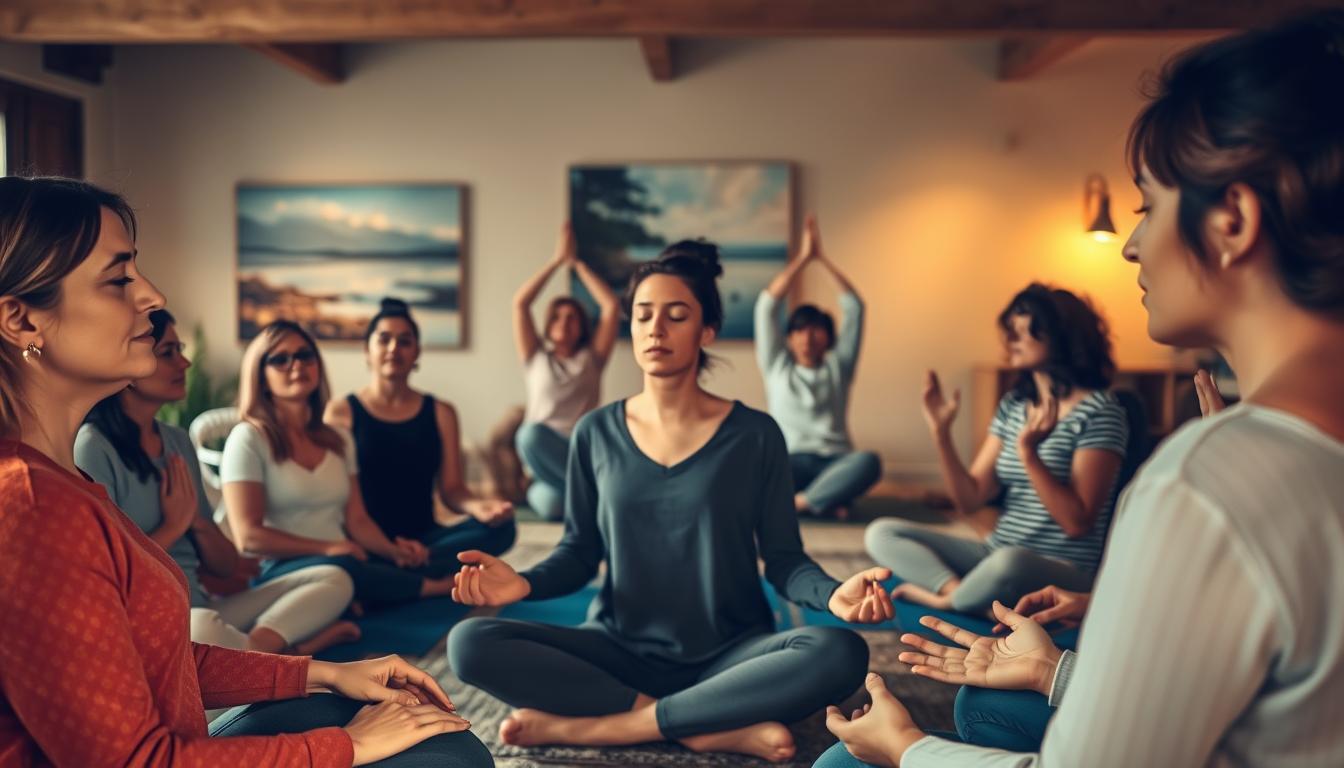
Effective Stress Management Group Activities to Combat Burnout
What if tackling workplace challenges became a shared mission instead of a solo burden? Collaborative approaches help teams reframe pressure points while building trust. Structured sessions create safe spaces to unpack common stressors—like unrealistic deadlines or unclear priorities—and turn them into solvable puzzles.
Role-playing scenarios let teams practice handling tough situations. One company reduced meeting conflicts by 42% after implementing weekly “perspective swap” exercises. Employees reported feeling more heard when stepping into others’ roles during simulated project roadblocks.
Interactive games also spark creative problem-solving. A 15-minute “solutions sprint” activity, where small groups brainstorm fixes for recurring issues, often reveals surprising fixes. Participants list top stressors, then vote on actionable ideas. This method cuts wasted time by aligning priorities across departments.
Open communication remains key. One finance team starts meetings with “energy check-ins”—quick shares about current headspace. This simple ritual helps colleagues adjust workloads and offer support. As one manager noted, “Knowing others have my back makes tough weeks manageable.”
These strategies form part of a larger recovery ecosystem. When teams tackle challenges together, they build resilience that outlasts any single crisis.
Deep Breathing and Mindfulness Techniques for Workplace Relief
Your breath holds more power than you realize. When deadlines loom or inboxes overflow, intentional breathing patterns can anchor us in the present moment. Studies show workers using the 4-7-8 method lower anxiety by 31% within minutes.
- Inhale quietly through your nose for 4 seconds
- Hold the breath for 7 seconds
- Exhale completely for 8 seconds
Repeat this cycle three times. One tech team reported 40% fewer afternoon energy crashes after adopting this routine. “It’s like hitting a mental refresh button,” shared a project lead.
Mindfulness meditation complements these practices. Even five-minute daily sessions train your brain to observe thoughts without judgment. Over time, this builds mental clarity during chaotic days. Research links regular meditation to improved decision-making and emotional regulation.
These tools create ripple effects. Teams practicing brief midday mindfulness breaks see 28% faster problem-solving rates. The key? Consistency over intensity. Start with one technique, then layer others as habits solidify.
By prioritizing these moments, we cultivate resilience that transforms how we navigate challenges—both today and tomorrow.
Physical Movement and Exercise for Stress Relief
Movement isn’t just about fitness—it’s a secret weapon against workplace tension. Studies show workers who add brief movement breaks report 33% fewer afternoon slumps. These micro-actions spark both physical and mental renewal, creating ripple effects across your day.
When we move, our bodies release endorphins—natural mood boosters that help reduce stress. A 10-minute walk can lower tension hormones by 20%, research reveals. Even chair stretches improve circulation, sharpening focus for complex tasks.
| Movement Break | Time | Benefit |
|---|---|---|
| Desk Stretches | 3 minutes | Relieves muscle stiffness |
| Walking Meeting | 10 minutes | Boosts creativity by 18% |
| Stair Climbing | 5 minutes | Increases energy levels |
Try pairing movement with mindfulness. After a brisk walk, pause for three deep breaths. This combo amplifies calmness while resetting your nervous system. One team reported 25% fewer headaches using this hybrid approach.
Proactive organizations now build movement into schedules. Lunchtime yoga or standing desks encourage consistent activity. As one employee shared, “Five-minute stretch sessions make deadlines feel manageable.”
Interactive and Creative Stress Relief Techniques for Teams
What if your next team meeting included laughter-filled games that sharpen focus while easing tension? Creative exercises like Calm Jenga and Silent Ball transform routine interactions into opportunities for renewal. These methods blend playfulness with purpose, helping teams reset their thoughts while strengthening workplace connections.
Calm Jenga adds a mindful twist to the classic game. Players write calming prompts on blocks—“Share a recent win” or “Name three things you’re grateful for.” As towers grow, so does team trust. One marketing team reported 29% smoother collaboration after monthly sessions.
Silent Ball works wonders for recentering energy. Teams pass a soft ball without speaking, focusing on movement and eye contact. This simple activity quiets mental chatter, allowing the body to release stored tension. A healthcare group uses it before high-stakes planning meetings to boost clarity.
Creative challenges also spark innovation. Try “Story Swap Circles” where teams build fictional narratives together. These sessions strengthen communication skills while providing mental breaks from task lists. As one manager noted, “We solve real problems faster after laughing through imaginary ones.”
By weaving play into the workday, teams nurture both individual health and collective morale. Experiment with methods that fit your workplace culture—the goal is progress, not perfection.
Building Strong Team Bonds Through Group Activities
Shared experiences at work act like glue—they hold teams together through tough projects and tight deadlines. Research reveals teams bonding through structured exercises report 41% lower anxiety levels compared to isolated colleagues. When we laugh, problem-solve, or create together, we build trust that outlasts temporary setbacks.
Collaborative challenges transform abstract workplace goals into tangible wins. A design team hosting weekly “creative jam sessions” saw productivity jump by 27% in three months. As one participant shared, “Solving puzzles together made us better at solving real client issues.”
| Activity | Time Investment | Key Benefit |
|---|---|---|
| Guided Storytelling Circles | 20 minutes | Builds empathy & vulnerability |
| Lunch & Learn Workshops | 60 minutes | Encourages knowledge sharing |
| Escape Room Simulations | 45 minutes | Sharpens collaborative problem-solving |
These tools help people feel valued beyond their job titles. A healthcare company using monthly team cooking classes reduced staff turnover by 19%. The secret? Shared tasks that require cooperation without hierarchy.
“When we stopped talking about work and started creating art together, our communication during crunch times improved dramatically.”
Positive interactions become anchors during chaotic periods. By intentionally designing moments of connection, we create workplaces where people thrive—not just survive.
Stress Management for Remote Work Environments
Remote work reshapes how we experience daily pressures—without office cues like lunch breaks or coworker chats, isolation creeps in. 43% of remote employees report difficulty disconnecting from job tasks after hours, according to recent surveys. This blurred line between personal and professional life fuels exhaustion, but intentional strategies can restore balance.
Start by anchoring the day with rituals. A 5-minute morning meditation or post-lunch stretch session signals transitions between work modes. Teams using virtual “coffee roulette” pair random participants for casual chats see 31% higher job satisfaction scores. These micro-connections combat loneliness while maintaining focus.
| Technique | Time | Benefit |
|---|---|---|
| Guided Virtual Meditation | 10 minutes | Enhances mental clarity |
| Collaborative Playlist Creation | 15 minutes | Boosts team morale |
| Scheduled Stretch Breaks | 3 minutes | Reduces physical tension |
Protect recovery time by blocking calendars for non-negotiable pauses. One software team designates “no-meeting Fridays,” freeing up 18% more time for deep work. Leaders who model these boundaries inspire company-wide cultural shifts.
“We host weekly ‘energy check-ins’ where team members share their capacity levels. It’s transformed how we distribute workloads.”
Every person benefits when we normalize protective practices. Whether through shared mindfulness apps or asynchronous celebration boards, small acts build collective resilience across digital spaces.
Enhancing Well-being with Visualization and Music Breaks
Imagine pressing pause on workplace chaos through the power of mental imagery and curated soundscapes. Research reveals workers using these methods experience 32% higher emotional resilience and 19% faster creative problem-solving. These tools help craft an inner sanctuary, even during hectic days.
Visualization exercises let us mentally escape tension. Close your eyes and picture a calming environment—a forest trail or quiet beach. Focus on sensory details: rustling leaves or warm sunlight. Studies show just 90 seconds daily strengthens neural pathways linked to calm focus.
Pair this with intentional music breaks. Instrumental tracks or nature sounds work best:
| Technique | Time | Benefit |
|---|---|---|
| Guided Visualization | 3 minutes | Boosts mental clarity |
| Classical Music Sessions | 5 minutes | Reduces anxiety spikes |
| Nature Sound Immersion | 7 minutes | Enhances creativity |
Teams combining these practices report 26% improved collaboration and renewed energy. One graphic design firm saw project revisions drop by 41% after introducing midday sound baths.
Our minds thrive when we balance focus with renewal. Start small—try a two-minute visualization during your next coffee break. Over time, these pauses become anchors, helping us navigate challenges with steadier resolve.
Conclusion
Rebuilding energy starts with recognizing our collective power. Through intentional breathing, movement breaks, and shared creative tools, we can transform workplace feelings of overwhelm into renewed purpose. Data confirms that blending personal mindfulness practices with team-based strategies creates lasting benefits for both well-being and productivity.
Individual actions matter—whether taking five-minute meditation pauses or scheduling walking meetings. Equally vital are collaborative efforts like solution-focused discussions or trust-building exercises. Together, these approaches address systemic issues while fostering environments where people thrive.
We encourage teams to reflect on which techniques resonate most. Could afternoon stretch sessions boost focus? Might weekly check-ins prevent communication gaps? Small experiments often reveal powerful benefits.
Let’s keep the conversation alive. Regular discussions about workload balance and emotional needs help teams tackle issues early. Remember—progress grows through consistent effort, not overnight fixes.
Every tool shared here serves one goal: helping you reclaim joy in daily work. By honoring both personal feelings and team dynamics, we build workplaces where resilience becomes the norm, not the exception. The path forward starts today—one mindful step at a time.