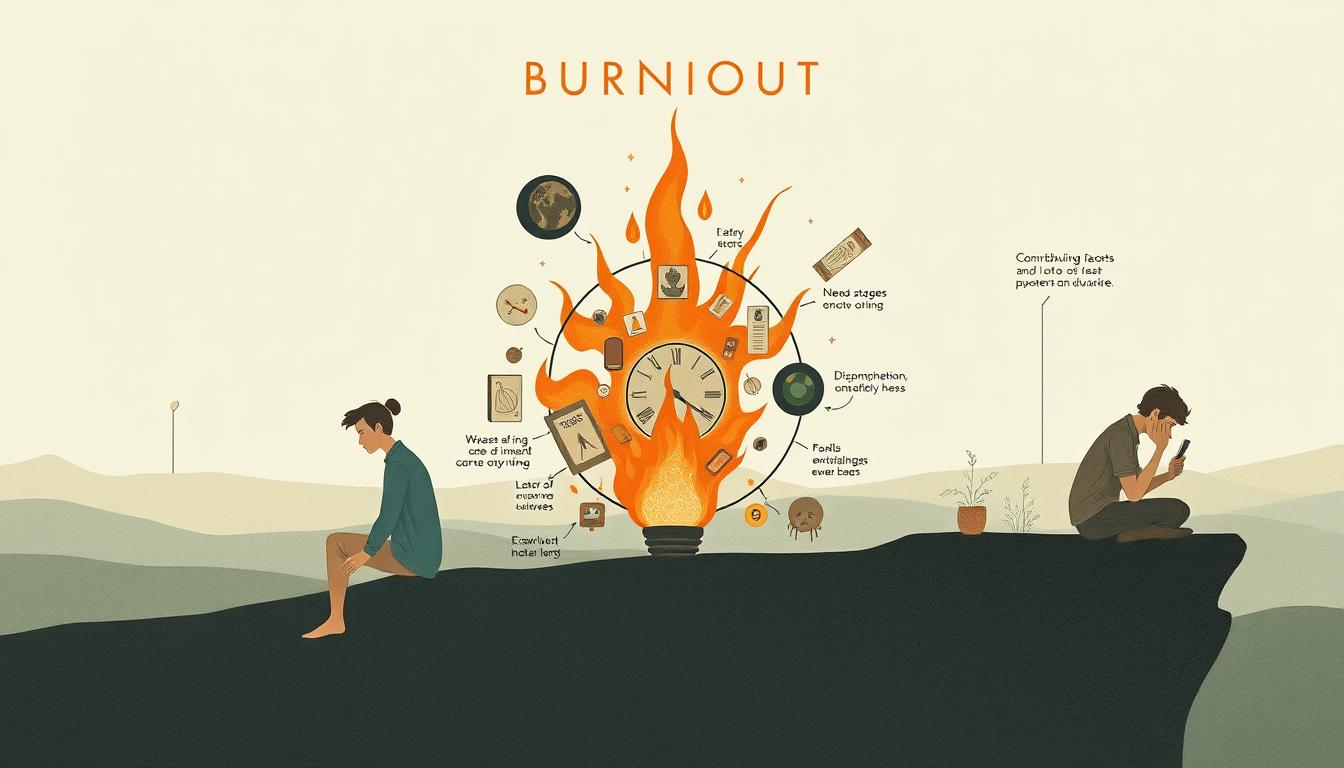
Did you know 55% of U.S. adults report feeling daily tension they can’t fully shake? Chronic strain doesn’t just vanish—it builds. Left unchecked, it rewires our bodies and minds, creating a path toward exhaustion that 43% of workers say they’ve experienced firsthand.
Our bodies are wired to handle short-term challenges. The CDC confirms this natural response helps us tackle urgent tasks. But when pressure becomes constant—like endless work deadlines or family demands—it erodes our health. Sleep suffers. Focus fades. Even simple decisions feel overwhelming.
This isn’t just “feeling tired.” Research from the NIMH shows prolonged strain alters brain chemistry, increasing risks for mood disorders. The good news? Small daily actions—like mindful breathing or a 10-minute walk—can reset our systems. We’ll explore how to spot burnout’s early warnings and reverse its grip.
Key Takeaways
- Burnout develops through five distinct phases, starting with subtle signs like persistent fatigue
- Chronic tension impacts both mental clarity and physical wellness over time
- Daily habits like movement and mindfulness create powerful protective barriers
- Recognizing early symptoms allows for quicker, more effective interventions
- Practical strategies exist to regain balance without drastic life changes
Introduction: Confronting Burnout and Embracing Our Stress Management Journey
We’ve all felt that invisible weight pressing down during hectic weeks. The American Psychological Association reveals 67% of adults say daily pressures make it hard to focus. But here’s the truth: tension doesn’t define us. By reshaping how we handle life’s demands, we reclaim our energy and clarity.
Acknowledging overwhelm isn’t weakness—it’s wisdom. Studies show people who name their struggles are 40% more likely to adopt healthy habits. Simple shifts matter: a three-minute breathing break between meetings, swapping late-night scrolling for stretching, or texting a friend instead of isolating.
Connection fuels resilience. Whether it’s sharing coffee with a coworker or joining a community yoga class, relationships buffer against strain. As one Mayo Clinic report notes, “Social bonds act like shock absorbers for life’s bumps.” Small acts of self-care compound, building mental armor against burnout’s creep.
This journey isn’t about perfection. It’s choosing progress—one hydrated morning, one mindful walk, one honest conversation at a time. Together, we’ll explore tools that fit real lives, not textbook ideals. Ready to rewrite your story?
The 5 Stages of Burnout and Their Impact on Our Well-Being
Burnout doesn’t crash through the door—it creeps in unnoticed. Mental health experts identify five phases that reshape how we experience daily life:
- Honeymoon Phase: High energy meets new challenges, but unsustainable habits form
- Fuel Shortage: Sleep disturbances and irritability emerge as our bodies signal overload
- Chronic Strain: Physical symptoms like headaches intensify; motivation plummets
- Crisis Mode: Anxiety or depression may surface, making basic tasks feel impossible
- Breakdown: Complete emotional exhaustion requiring professional intervention
The NIMH reports chronic stress triples the risk of mood disorders. Early warnings—like forgetting lunch dates or snapping at loved ones—often get dismissed as “just a bad week.” But these are flashing dashboard lights our minds can’t ignore.
Dr. Lisa Kim, a behavioral researcher, notes: “Burnout rewires neural pathways. What begins as temporary fatigue becomes a default state without intervention.” Simple changes help break this cycle:
- Swap late-night scrolling with 7-hour sleep minimums
- Schedule 15-minute “reset breaks” between tasks
- Identify three daily non-negotiable wellness activities
Recognizing which stage we’re in allows targeted solutions. Crisis Mode might need therapy, while Fuel Shortage responds to better hydration and movement. Every phase offers exit ramps—if we notice the signs early enough.
Our bodies speak through symptoms. Listening could mean regaining energy for life’s meaningful moments rather than watching them blur into survival mode.
Recognizing the Signs: Physical, Emotional, and Mental Symptoms
Our bodies send distress signals long before burnout becomes a crisis. Physical warnings like tension headaches or stomach discomfort often appear first. A Journal of Behavioral Medicine study found 68% of adults experience body aches during prolonged strain—a red flag many dismiss as normal fatigue.
Emotional shifts creep in subtly. You might snap at coworkers over minor issues or feel detached from hobbies you once loved. As Dr. Elena Torres notes: “Irritability isn’t a personality flaw—it’s your nervous system begging for rest.”
Mental fog clouds decision-making. Forgetting deadlines or struggling to follow conversations signals cognitive overload. Research shows sleep disruptions worsen this haze—people averaging under six hours nightly are 42% more likely to report concentration issues.
Three key symptom categories demand attention:
- Physical: Frequent headaches, digestive troubles, or appetite changes
- Emotional: Uncharacteristic anxiety, cynicism, or emotional numbness
- Mental: Persistent forgetfulness and reduced problem-solving abilities
Noticing these patterns isn’t about self-judgment—it’s empowerment. When morning coffee stops working and weekends don’t recharge you, it’s time to act. Simple adjustments like hydrating first thing or scheduling “screen-free” evenings can spark meaningful change.
Your health deserves proactive care, not crisis management. By honoring these signals early, we reclaim control over our well-being—one aware moment at a time.
Effective Stress Management Techniques
Daily choices shape our resilience against life’s pressures. The CDC confirms simple habits create powerful shields against overwhelming demands. Let’s explore practical tools that fit busy schedules.
Start with breath work. Five minutes of diaphragmatic breathing lowers heart rate and sharpens focus. BetterHelp therapists suggest pairing this with gratitude journaling: “Writing three positive observations daily rewires neural pathways.”
Movement matters more than marathons. Try these micro-activities:
| Technique | Benefit | Time Needed |
|---|---|---|
| Desk stretches | Relieves muscle tension | 2 minutes/hour |
| Lunchtime walks | Boosts creativity | 12 minutes/day |
| Evening yoga flows | Improves sleep quality | 15 minutes |
Digital detoxes prevent overload. Schedule news-free hours and mute non-urgent alerts after work. One study found people who limited social media to 30 minutes daily reported 23% less anxiety.
Consistency beats intensity. Build a sustainable routine:
- Hydrate before caffeine
- Take screen breaks every 90 minutes
- Practice 4-7-8 breathing during commutes
Our bodies thrive on rhythm. Pair morning sunlight exposure with evening wind-down rituals for better energy regulation. Small changes compound—start where you are.
Adopting Healthy Coping Strategies and Lifestyle Changes
Building lasting resilience begins with rethinking daily patterns. Small, consistent choices create ripple effects that protect both mind and body. Let’s explore practical upgrades to nourish our whole selves.
Sleep quality fuels everything. The National Sleep Foundation recommends keeping screens out of bedrooms and establishing pre-bed rituals like reading or light stretching. “Consistent wake times anchor circadian rhythms better than weekend sleep-ins,” notes sleep researcher Dr. Maya Lin.
Nutrition matters beyond calories. Try these swaps:
- Replace afternoon energy drinks with green tea
- Add colorful veggies to two meals daily
- Hydrate before reaching for snacks
Social connections act as emotional armor. Weekly coffee meetups or joining a book club counter isolation. Workplace boundaries help too—setting “email-free evenings” preserves energy for personal priorities.
Movement shouldn’t feel punishing. Dance while cooking. Take walking meetings. Park farther from store entrances. These micro-actions boost circulation and mood without gym pressures.
Remember—progress over perfection. Each mindful choice strengthens our capacity to handle life’s challenges while staying grounded in what truly matters.
Strategies for On-the-Spot Stress Relief and Enhancing Mental Wellness
When tension spikes, quick interventions can calm storms before they escalate. Try these science-backed methods to regain balance in real time:
Engage your senses: Cleveland Clinic experts recommend the 5-4-3-2-1 grounding method. Name five things you see, four textures you feel, three sounds you hear, two scents you notice, and one flavor you taste. This resets overactive thoughts by anchoring you in the present.
Micro-meditations work wonders. Close your eyes and inhale for four counts, hold for seven, exhale for eight. Repeat three times. “This breathing pattern activates the parasympathetic nervous system within 90 seconds,” explains mindfulness coach Rachel Nguyen.
- Walk briskly around the block—movement clears cortisol faster than stillness
- Hum a favorite song to stimulate the vagus nerve
- Sip cold water while focusing on its journey down your throat
These strategies aren’t replacements for deeper care—they’re emergency tools. Pair them with consistent sleep schedules and social connections for lasting mental health benefits.
Your body deserves immediate compassion during overwhelm. By responding swiftly to rising pressure, you protect both cognitive function and emotional resilience. What three-second reset will you try first?
Conclusion
Every journey toward balance starts with recognizing where we stand. The five stages of burnout—from initial enthusiasm to full exhaustion—show how gradual erosion of energy impacts our health and relationships. Early detection of warning signs gives us power to course-correct before reaching crisis points.
Simple daily practices create lasting change. Breathing exercises, hydration routines, and boundary-setting aren’t luxuries—they’re non-negotiable wellness practices. Studies confirm that people who prioritize these habits report 31% higher life satisfaction scores.
Our mental health thrives on consistency, not perfection. Whether it’s a five-minute walk after meals or reaching out to a friend during tough days, small choices build resilience. The NIH found that social connections reduce burnout risks by 40%—proof that support systems matter.
Let’s honor our body’s signals and respond with compassion. Progress happens through repeated acts of self-care, not overnight transformations. If challenges persist, professional guidance offers tailored strategies for recovery.
You hold the tools to rewrite your story. Start today—one mindful step builds the path to sustained well-being.